
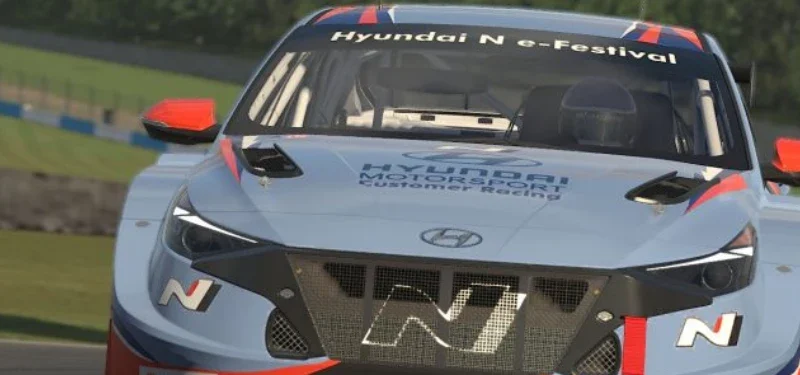
Russian Esports Athletes Banned from Hyundai Virtual Racing Championship
In the latest development affecting Russian participation in international sports competitions, two prominent Russian esports athletes have been suspended from a major virtual racing championship. Kirill Antonov and Kirill Sokovikov, both accomplished sim racers, have been barred from competing in the Hyundai N e-Festival Global League, a prestigious tournament hosted on the iRacing simulation platform. The decision continues a pattern of exclusions that has affected Russian competitors across virtually every sporting discipline since early 2022.
The Hyundai N e-Festival Global League represents one of the most significant competitions in the sim racing calendar, bringing together elite virtual drivers from around the world to compete in highly realistic racing conditions. The iRacing platform, developed by iRacing Motorsport Simulations, is widely regarded as the gold standard for professional racing simulation, featuring meticulously recreated tracks and physics engines that mirror real-world driving conditions. Professional racing teams, including those from Formula 1 and NASCAR, regularly use iRacing for driver training and development purposes.
The suspension of Antonov and Sokovikov follows broader international sanctions and sporting bans implemented against Russian athletes in the wake of geopolitical tensions. Since February 2022, international sporting federations across numerous disciplines have restricted Russian participation in competitions, ranging from traditional Olympic sports to emerging esports categories. The International Olympic Committee initially recommended that sports federations ban Russian and Belarusian athletes from international events, and many governing bodies have maintained these restrictions despite ongoing debates about the fairness of collective punishment for individual athletes.
Sim racing has experienced exponential growth in recent years, particularly accelerated by the global pandemic when traditional motorsports faced widespread cancellations. The discipline has attracted investments from major automotive manufacturers like Hyundai, which sponsors the N e-Festival series as part of its broader engagement with younger, digitally-native audiences. The championship serves not only as a competitive platform but also as a marketing vehicle for Hyundai’s performance-oriented N brand, which competes with offerings from traditional performance car manufacturers.
Both Antonov and Sokovikov had established themselves as formidable competitors in the virtual racing community. Their exclusion represents a significant blow to their professional careers and earning potential, as top-tier sim racing events offer substantial prize pools and sponsorship opportunities. The esports industry has grown into a multi-billion dollar global enterprise, with competitive gaming increasingly recognized as a legitimate professional pathway. However, the industry’s international nature makes it particularly susceptible to geopolitical pressures and the regulatory decisions of corporate sponsors.
The decision to exclude Russian competitors from the Hyundai championship raises ongoing questions about the application of sporting sanctions to esports, which operates under a different governance structure than traditional athletics. Unlike Olympic sports, which fall under established international federation frameworks, esports competitions are often organized directly by game publishers, corporate sponsors, or independent tournament organizers, each applying their own policies regarding participation eligibility. This decentralized structure means that Russian esports athletes may face inconsistent treatment across different competitions and platforms.
Critics of blanket sporting bans argue that individual athletes should not be held responsible for the actions of their governments, while supporters maintain that international isolation across all sectors, including sports and entertainment, represents a necessary response to geopolitical aggression. The debate continues to divide the international sporting community, with some federations beginning to explore pathways for Russian athletes to compete under neutral flags or other conditional arrangements. For now, however, competitors like Antonov and Sokovikov remain sidelined from major international events, their virtual racing ambitions put on hold indefinitely as the broader geopolitical situation continues to evolve without clear resolution in sight.